About Daruma
Daruma has stood alongside people's wishes in Japan for over 400 years. Here's its origin, its meaning, and why it's now poised to reach the world.
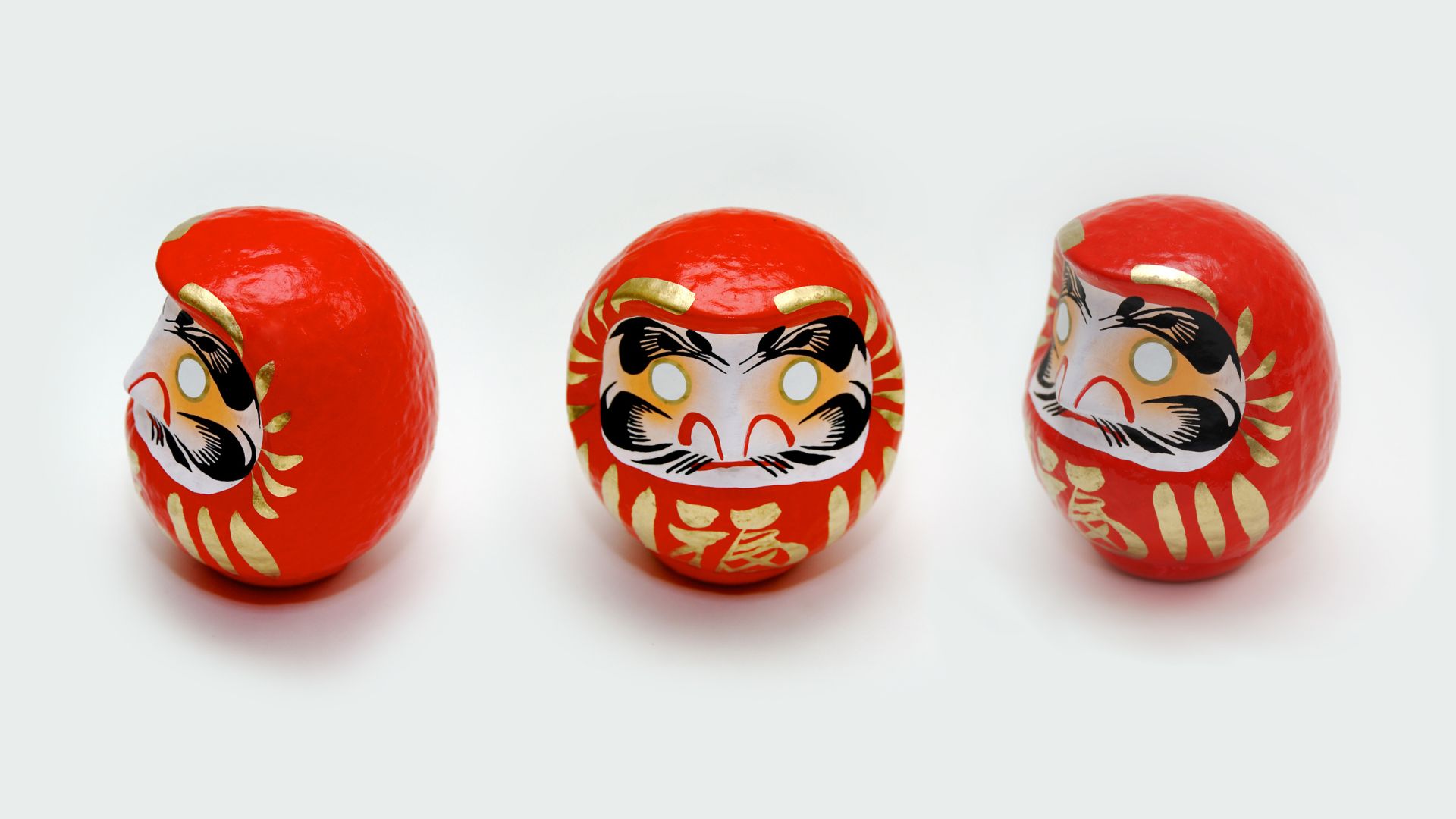
Daruma is modeled after Bodhidharma, the monk who carried Zen from India to China, seated in meditation. Popularized in the Edo period as a talisman against illness, its rounded, self-righting form came to symbolize "fall seven times, rise eight" — the resolve to keep striving toward a goal.
For exam success, business prosperity, election campaigns, or a new venture, daruma is chosen again and again as a vessel for wishes at life’s turning points.
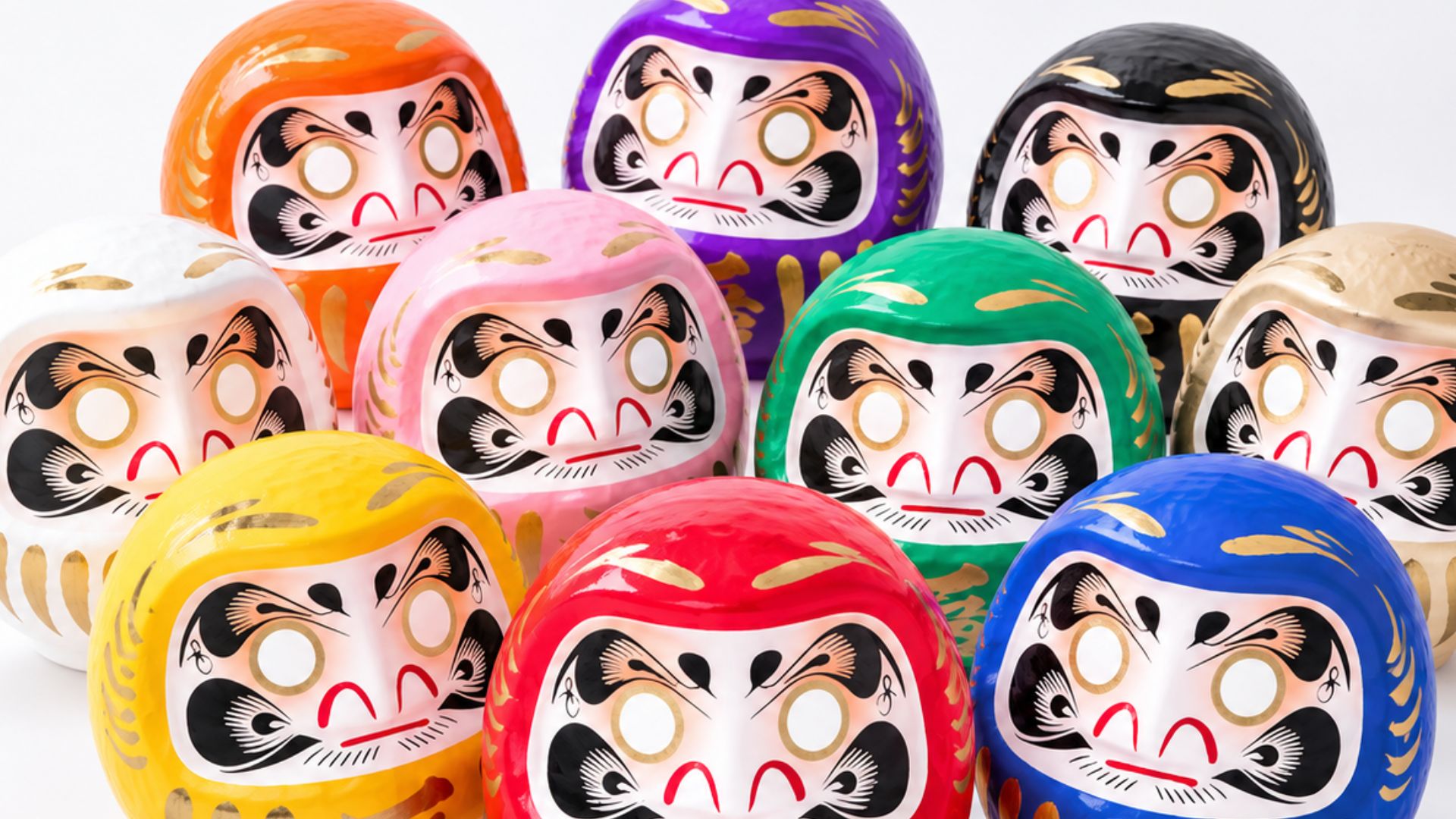
The most common red has several origin theories, among them a vermilion believed to ward off illness, and the color of a Zen monk’s robe. In recent years, gold (prosperity), white (purification, new beginnings) and blue (study, growth) have broadened the palette to match different wishes.
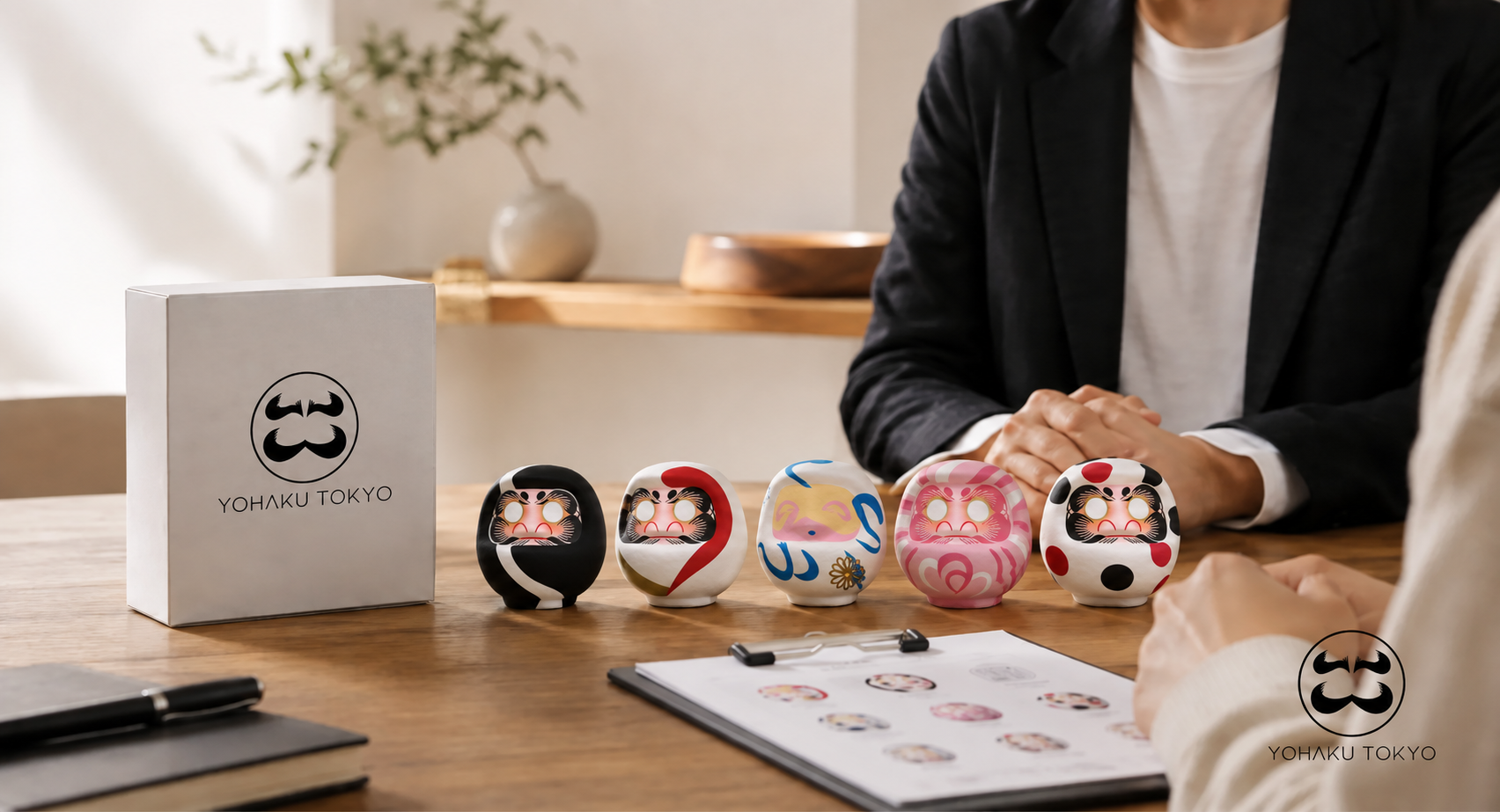
YOHΛKU TOKYO’s five collections, each in a different color, grow directly out of this tradition of choosing color by wish.
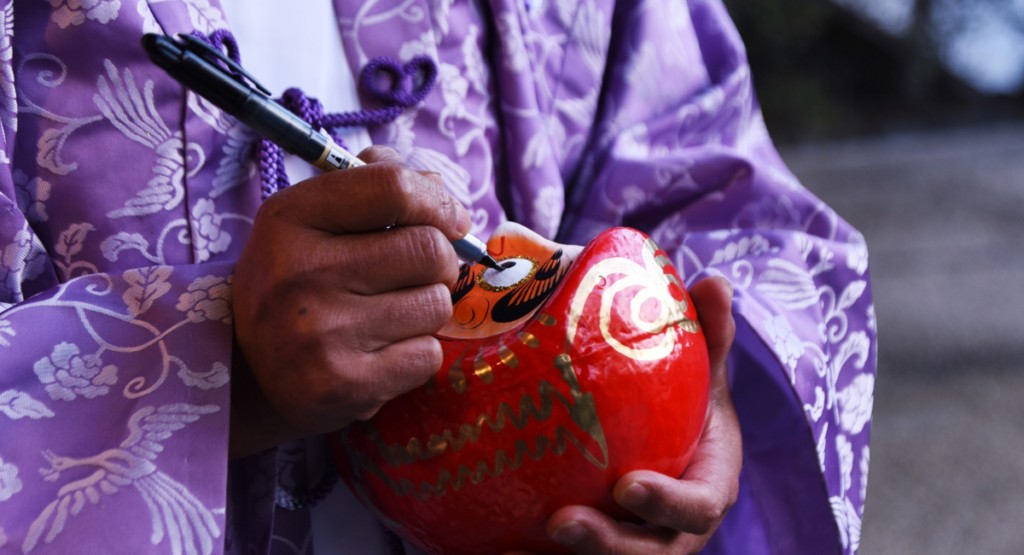
Daruma’s defining feature is that it arrives with blank eyes. You paint one eye in when you set a wish, and the other when it comes true — this act, kaigen, turns daruma from a static object into a participatory ritual completed over time.
Visualizing a goal and living alongside it daily — the structure maps naturally onto contemporary goal-setting and habit culture.
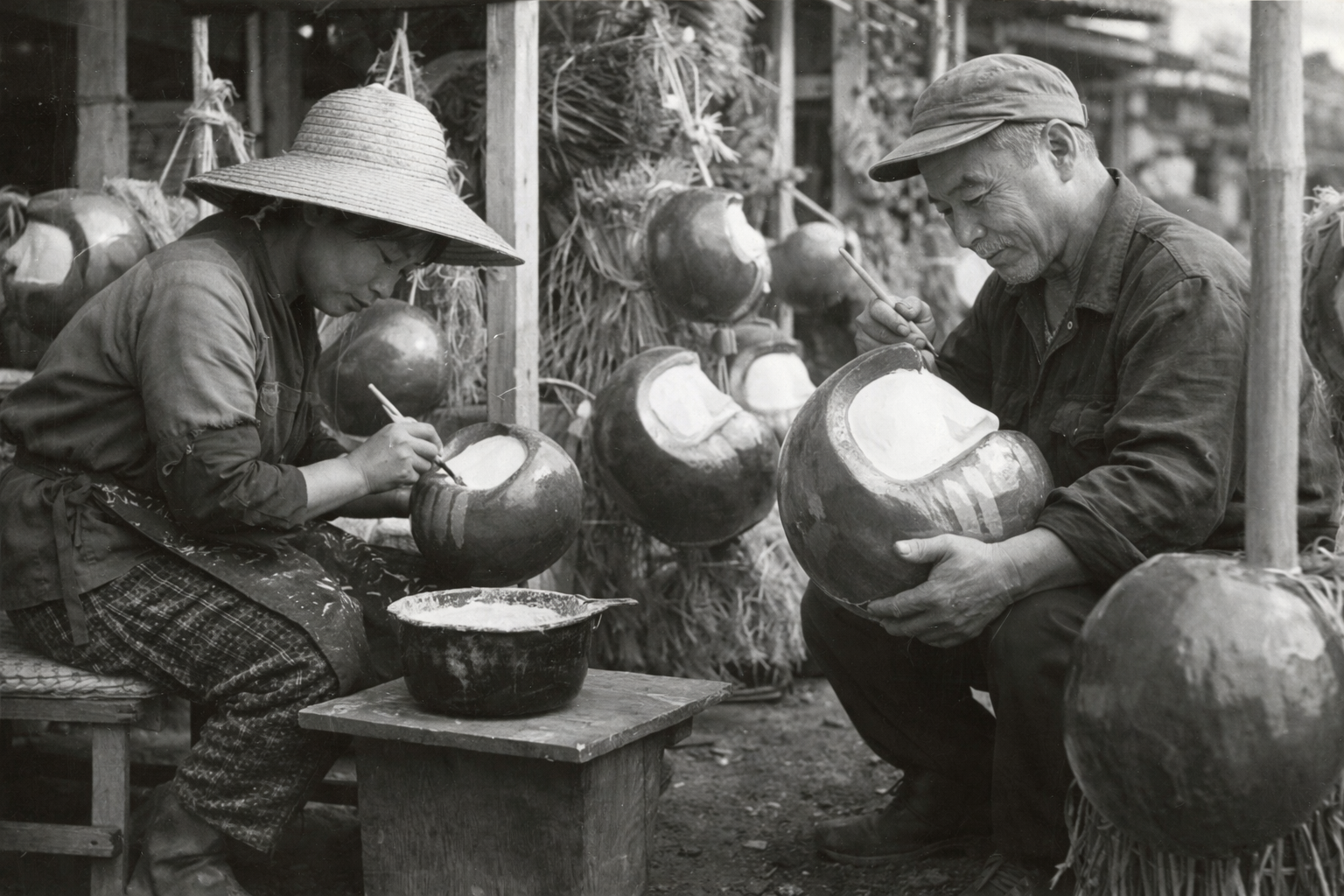
Production centers on Takasaki in Gunma Prefecture (Takasaki daruma) and Shirakawa in Fukushima Prefecture (Shirakawa daruma), among a small number of other regions. Most daruma in circulation in Japan today are supported by the handwork of a small number of production areas and craftsmen.
Because each piece is painted by hand, no two are ever quite identical, even from the same mold. We believe that variation is exactly the value a mass-produced object can’t offer.
The structure daruma carries — pray, visualize a wish, complete it upon achievement — is a highly universal cultural format, intuitive even without knowledge of Japanese language or religion.
Not exporting daruma as-is, but translating the structure daruma carries into how people live around the world — that is why we say "daruma, for the world."
Daruma, for the world.